
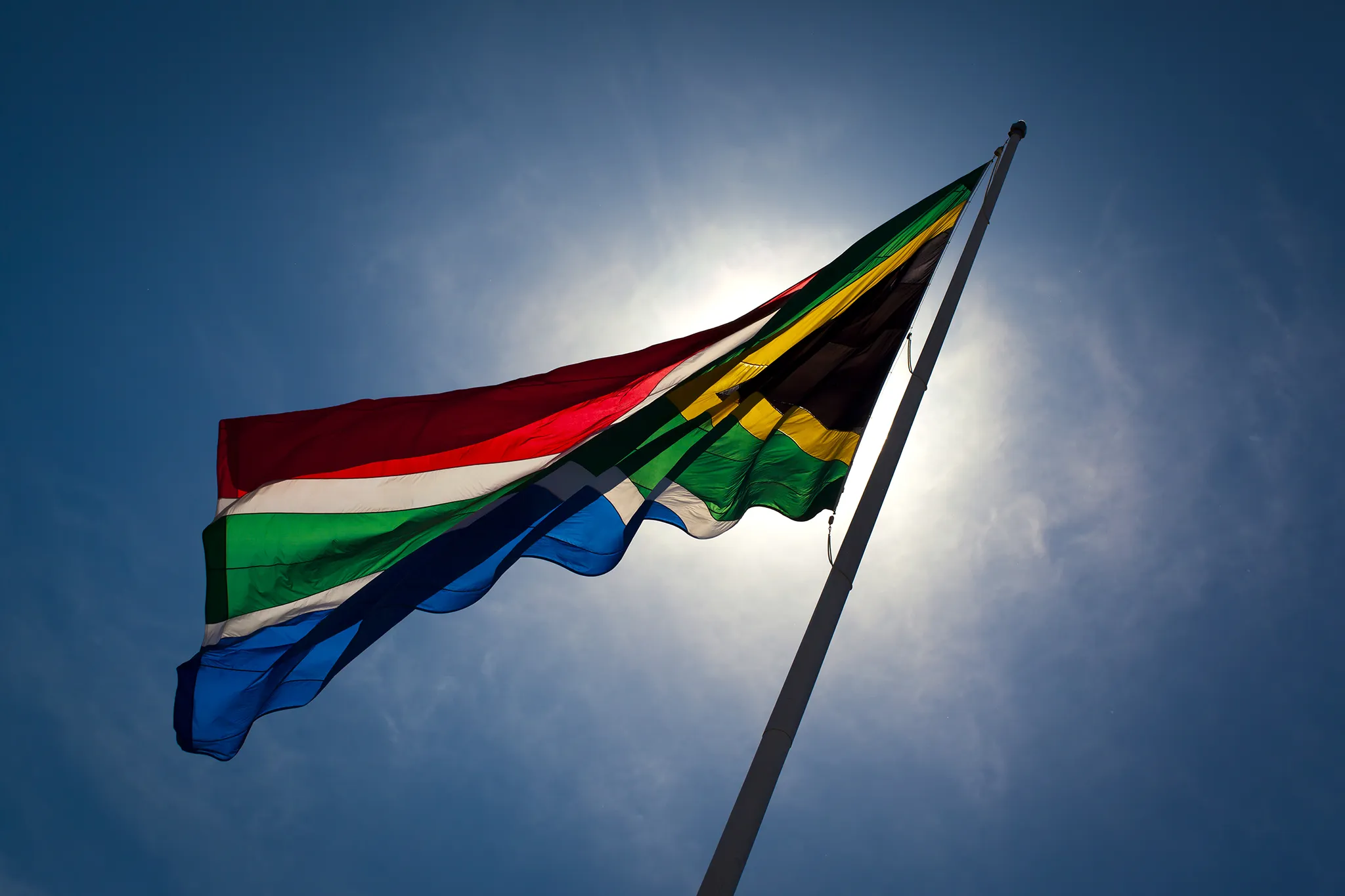
The answer: millions of South Africans do.
While international rugby rivalries have always attracted attention, the significance of events such as the upcoming All Blacks tour extends far beyond the sport itself. In South Africa, spectator sport occupies a unique place in society. It is part entertainment, part identity, and often one of the few experiences capable of bringing people from vastly different backgrounds together around a shared moment.
According to the latest BrandMapp data, rugby has firmly established itself as South Africa’s leading spectator sport among the country’s consumer class, and the reasons behind that rise are more nuanced than many might expect.
Sport Remains One of South Africa's Strongest Cultural Connectors
In a country known for its diversity, sport continues to serve as a common language.
Major sporting fixtures regularly transform homes, sports bars, taverns, stadiums and fan parks into communal gathering places. Whether it’s a Springbok test match, a Proteas series or an important Bafana Bafana fixture, these events create moments of collective attention that few other forms of media or entertainment can achieve.
For many South Africans, supporting a team is deeply personal. Sporting loyalties are often passed down through generations, linked to memories, traditions and moments of national pride.
This helps explain why the arrival of the All Blacks continues to generate excitement. It is not simply about rugby. It is about participating in a cultural moment that resonates across the country.
Rugby Has Become South Africa's Most Popular Spectator Sport
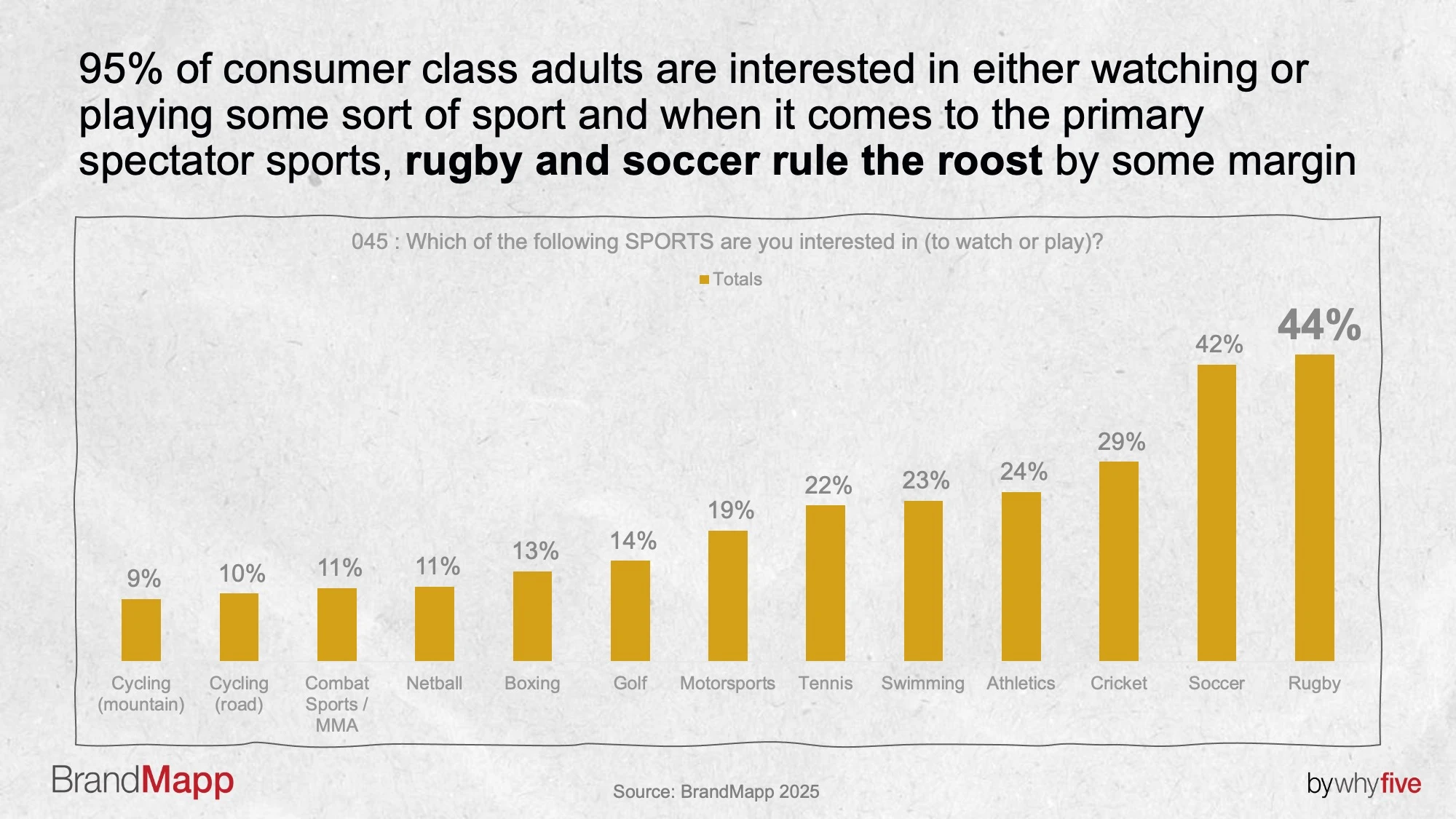
According to BrandMapp’s annual survey of South Africa’s consumer class, 95% of adults living in households earning more than R10,000 per month have an interest in either watching or participating in sport.
Within that audience, rugby now occupies the top position:
Percentage of South Africans watching per sport:
These three sports form what BrandMapp refers to as South Africa’s “Big 3” spectator sports. Rugby’s position at the top reflects both its historic significance and the impact of recent international success.
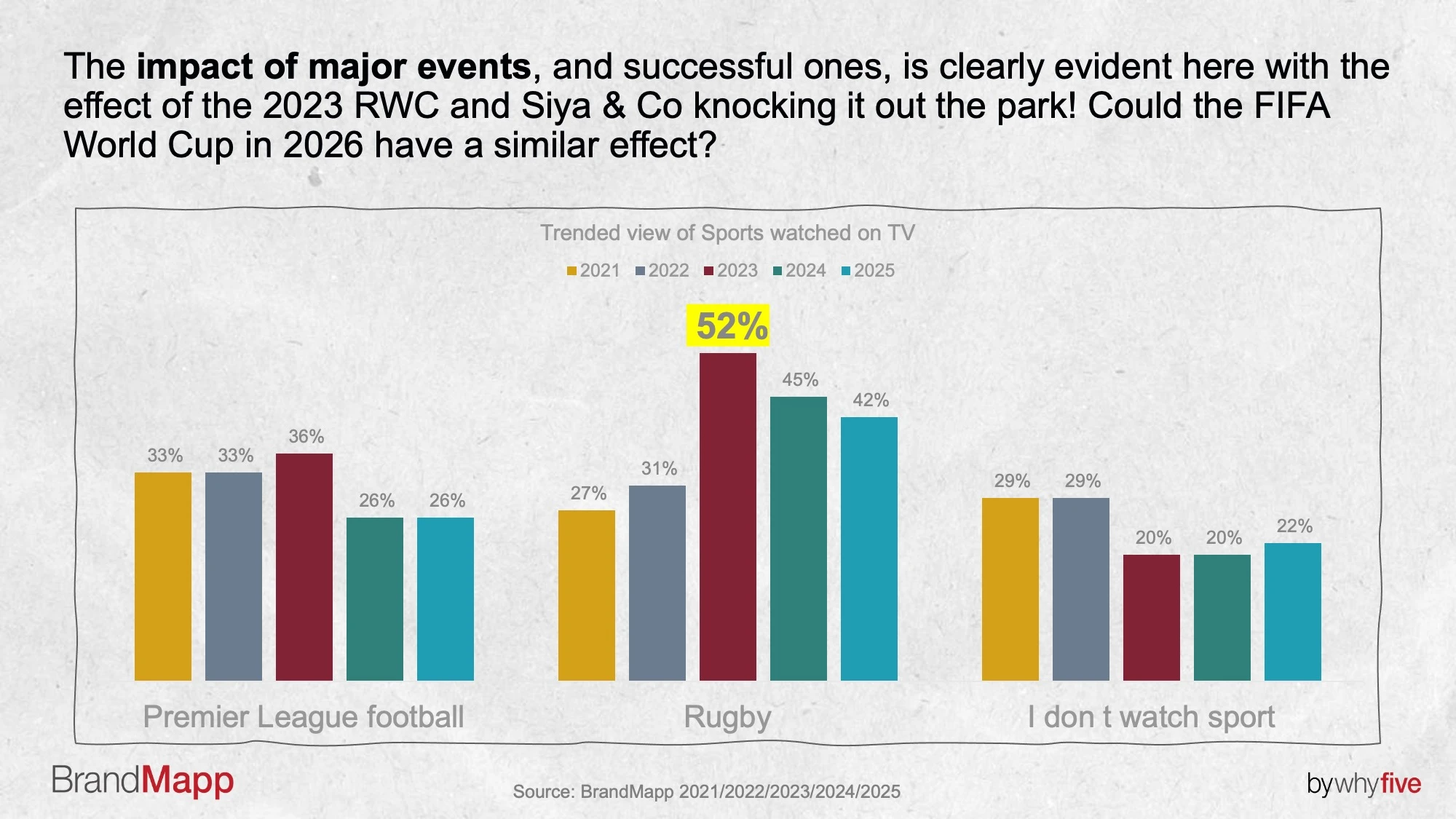
Back-to-back Rugby World Cup victories in 2019 and 2023, combined with the Springboks becoming the first nation to secure four World Cup titles, have undoubtedly strengthened public support and engagement.
Success matters. Winning creates visibility, builds emotional investment and attracts new supporters. However, BrandMapp’s data suggests there is another important factor contributing to rugby’s rise.
The Growing Influence of Women Rugby Fans
One of the most interesting findings from the BrandMapp research is the role women have played in expanding rugby’s audience.
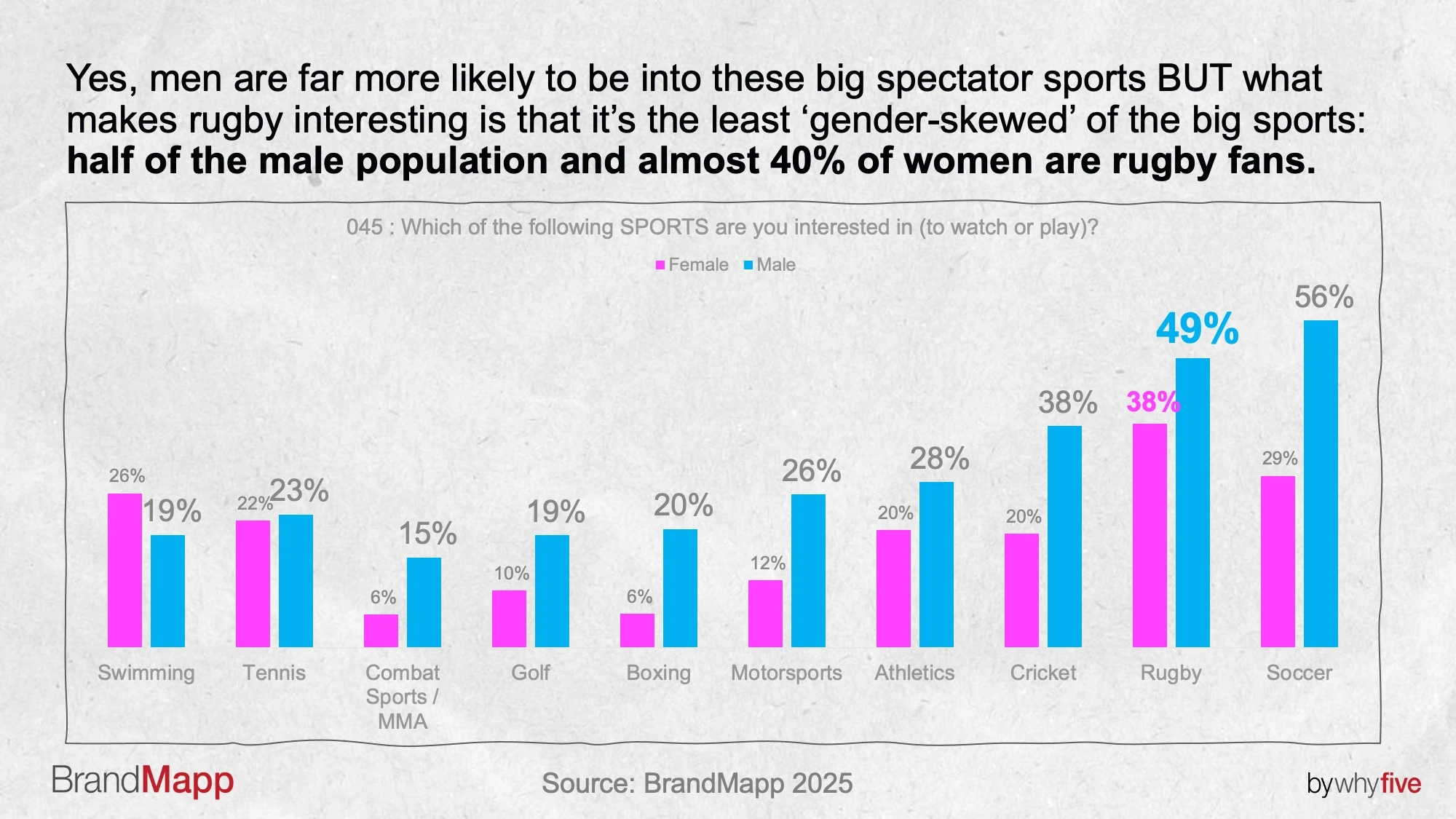
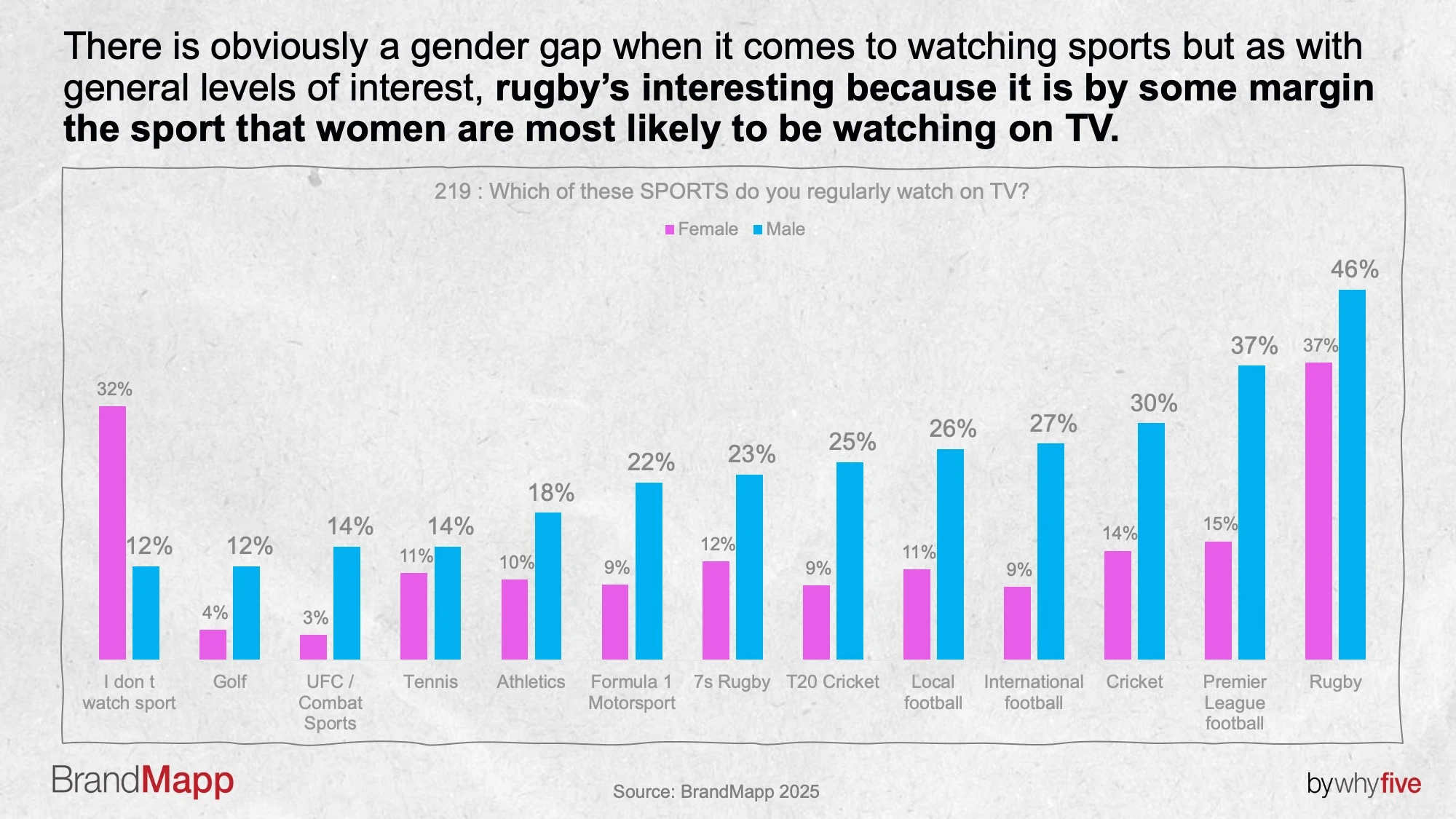
Historically, rugby has often been viewed as a predominantly male sport. While men still make up a larger proportion of viewers, the gender gap has narrowed considerably over time.
Current BrandMapp data shows:
- 49% of men watch rugby
- 38% of women watch rugby
By comparison, soccer shows a far wider gender divide:
- 56% of men watch soccer
- 29% of women watch soccer
This makes rugby one of the most gender-inclusive spectator sports in South Africa.
BrandMapp Director of Storytelling Brandon de Kock points to several factors behind this shift. One is what he describes as the “Siya Kolisi effect”, reflecting how rugby has become increasingly representative and inclusive across different communities and demographics.
As rugby has evolved, so too has its audience. The sport now appeals to a broader cross-section of South African society than ever before.
Sports Watching Is a Social Experience
Sport is rarely consumed in isolation.
BrandMapp’s findings show that spectator sport remains deeply social, with many South Africans actively seeking opportunities to share the experience with others.
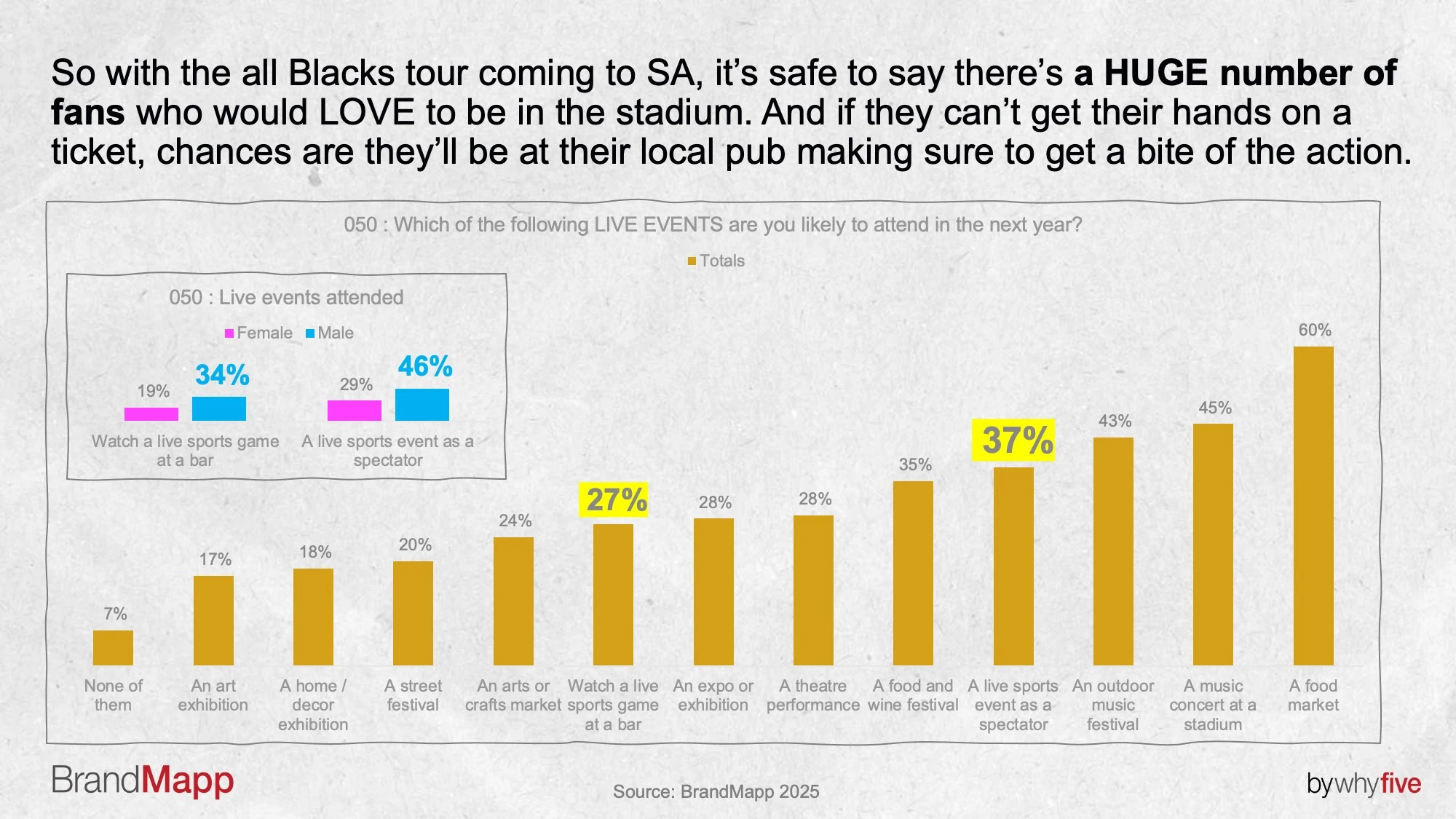
Among South Africa's consumer class:
- 37% enjoy attending live sporting events
- 27% watch matches communally at venues such as sports bars
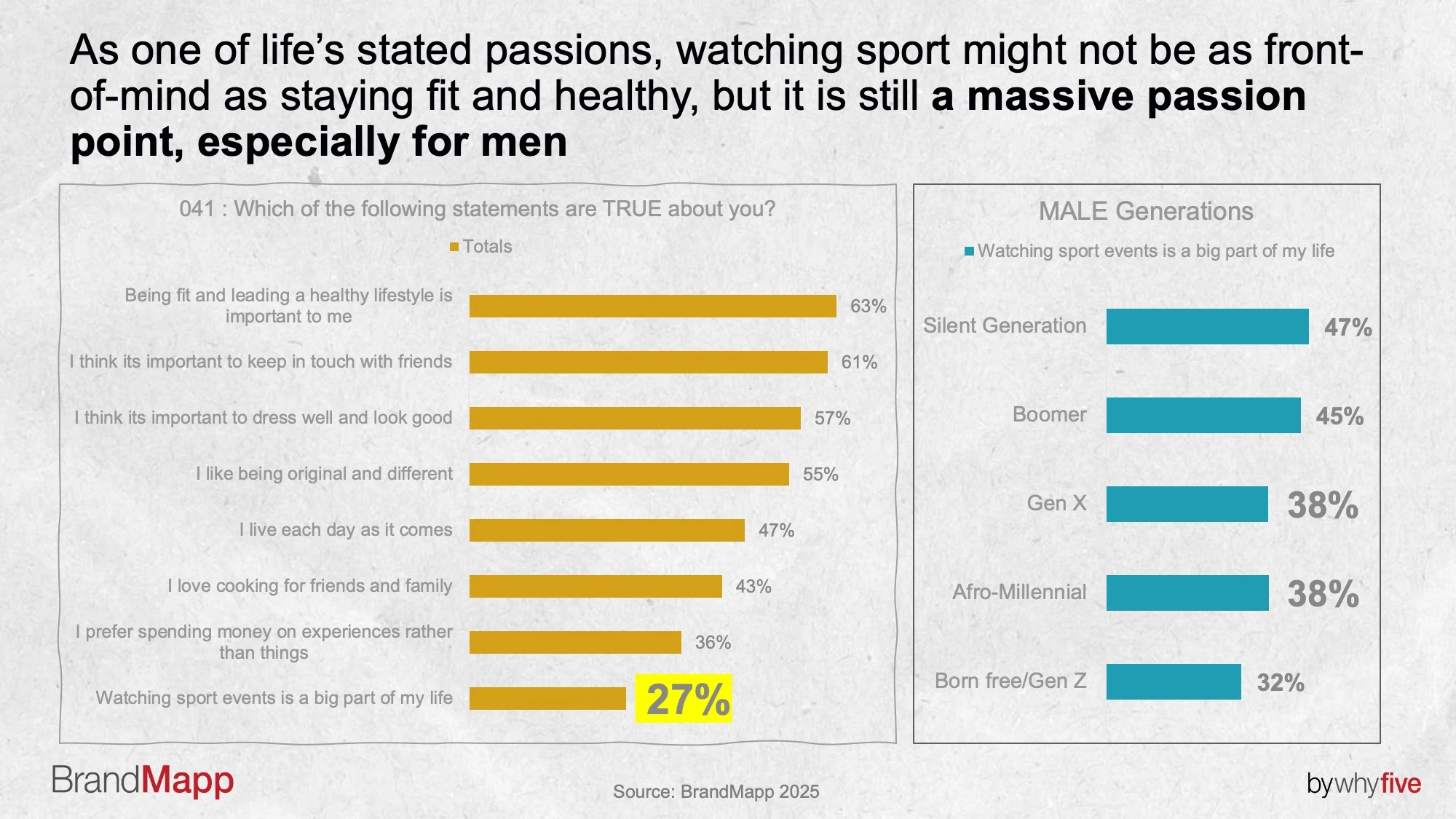
- 27% of men describe sports viewership as "a big part of my life"
This creates a ripple effect that extends beyond the sporting event itself.
When major tournaments and international tours take place, the benefits are felt across hospitality, entertainment, tourism and retail sectors. Restaurants fill up. Sports bars become gathering places. Stadiums attract thousands of visitors. Entire communities participate in the event experience.
With the Springboks set to compete against England, Scotland and Wales in the 2026 Nations Championship, followed by the highly anticipated All Blacks tour later in the year, South Africa’s sports economy is likely to see another significant boost.
The Rise of the Hybrid Sports Fan
While traditional sports viewing remains strong, the way people consume sport is changing.
Today’s sports fan no longer relies on a single platform or viewing experience.
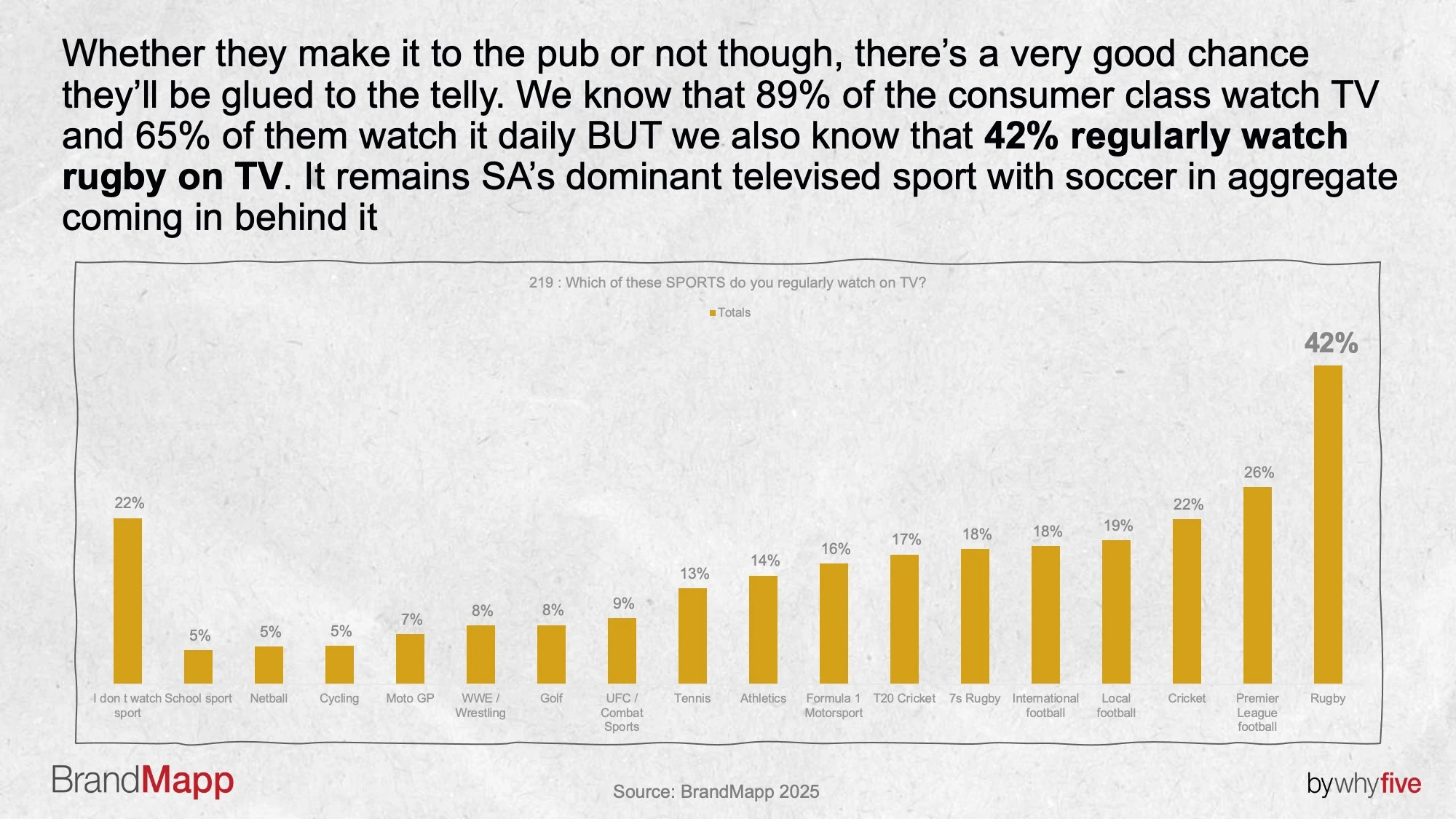
According to BrandMapp, 89% of South Africa’s consumer class still watch television, with 65% doing so daily. Rugby remains a major television attraction, with 42% regularly watching rugby on TV.
However, viewing habits are becoming increasingly fragmented.
Many fans now combine:
- Live television broadcasts
- Streaming platforms
- YouTube channels
- Social media commentary
- Online highlights and analysis
- Community discussions and fan forums
This has created what could be described as the “hybrid sports fan”, someone who moves seamlessly between multiple platforms before, during and after a match.
Dedicated rugby communities such as SA Rugby’s BokTube and independent rugby-focused digital channels are expanding how supporters engage with the sport beyond match day.
The game no longer begins at kick-off and ends at the final whistle. For many fans, it has become an always-on experience.
What Gen Z's Viewing Habits Tell Us
Generational trends are also beginning to reshape the sports landscape.
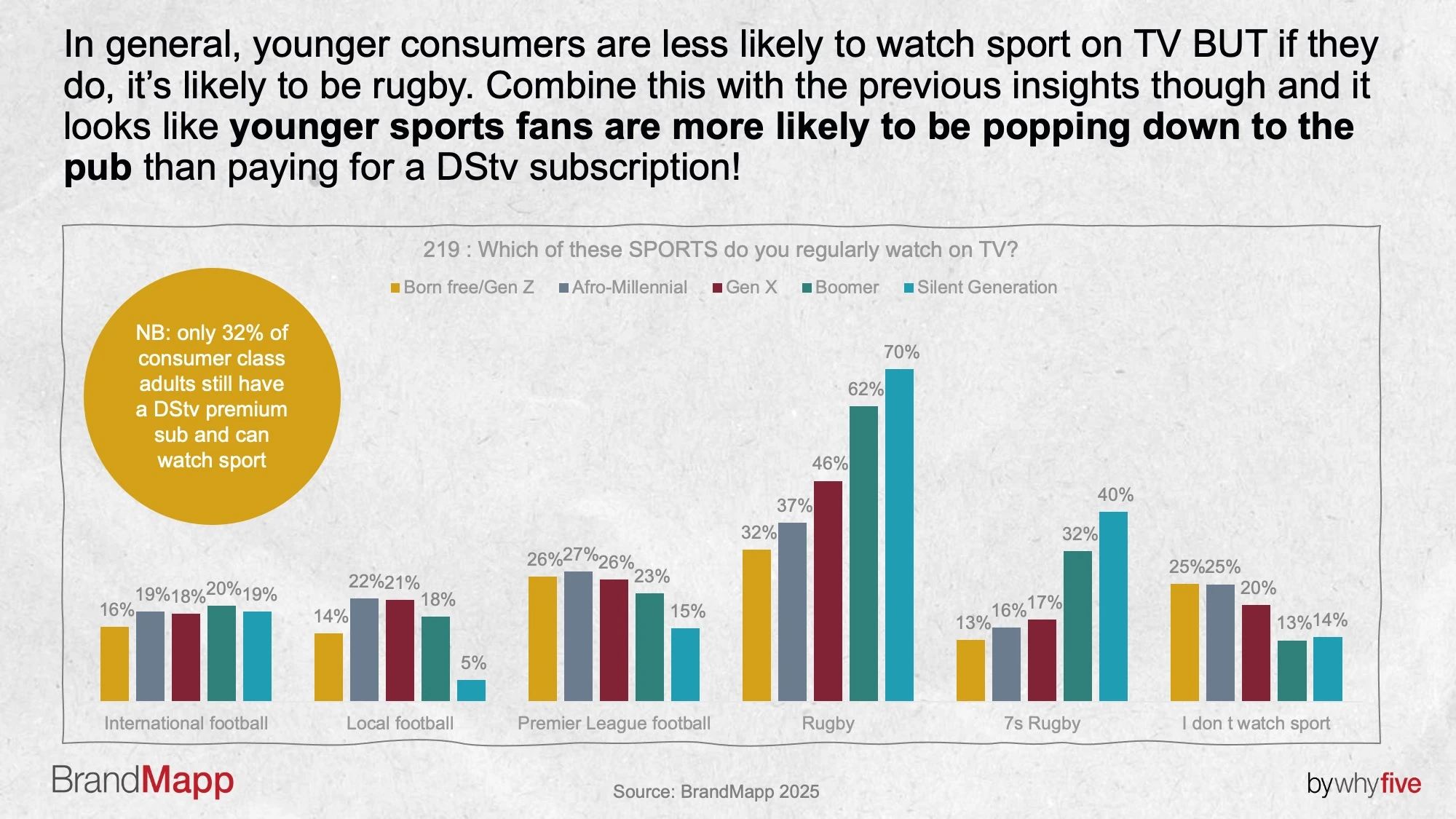
BrandMapp data shows that Gen Z watches less television than older generations. However, this does not necessarily mean younger audiences are less interested in sport.
When Gen Z chooses to watch sport, rugby remains one of their preferred options.
The difference lies in how they access content.
Younger audiences are more likely to consume sport through a mix of mobile devices, streaming services, social platforms and communal viewing experiences rather than relying exclusively on traditional television subscriptions.
This trend mirrors developments already seen in international markets.
Streaming Is Beginning to Reshape Sports Consumption
Around the world, sport remains one of the few categories that consistently attracts live audiences.
However, streaming platforms are steadily gaining ground.
BrandMapp has observed ongoing declines in DStv subscriptions while streaming platform adoption continues to grow.
Several developments highlight this shift:
- Formula One fans can now access dedicated streaming services at relatively affordable annual costs.
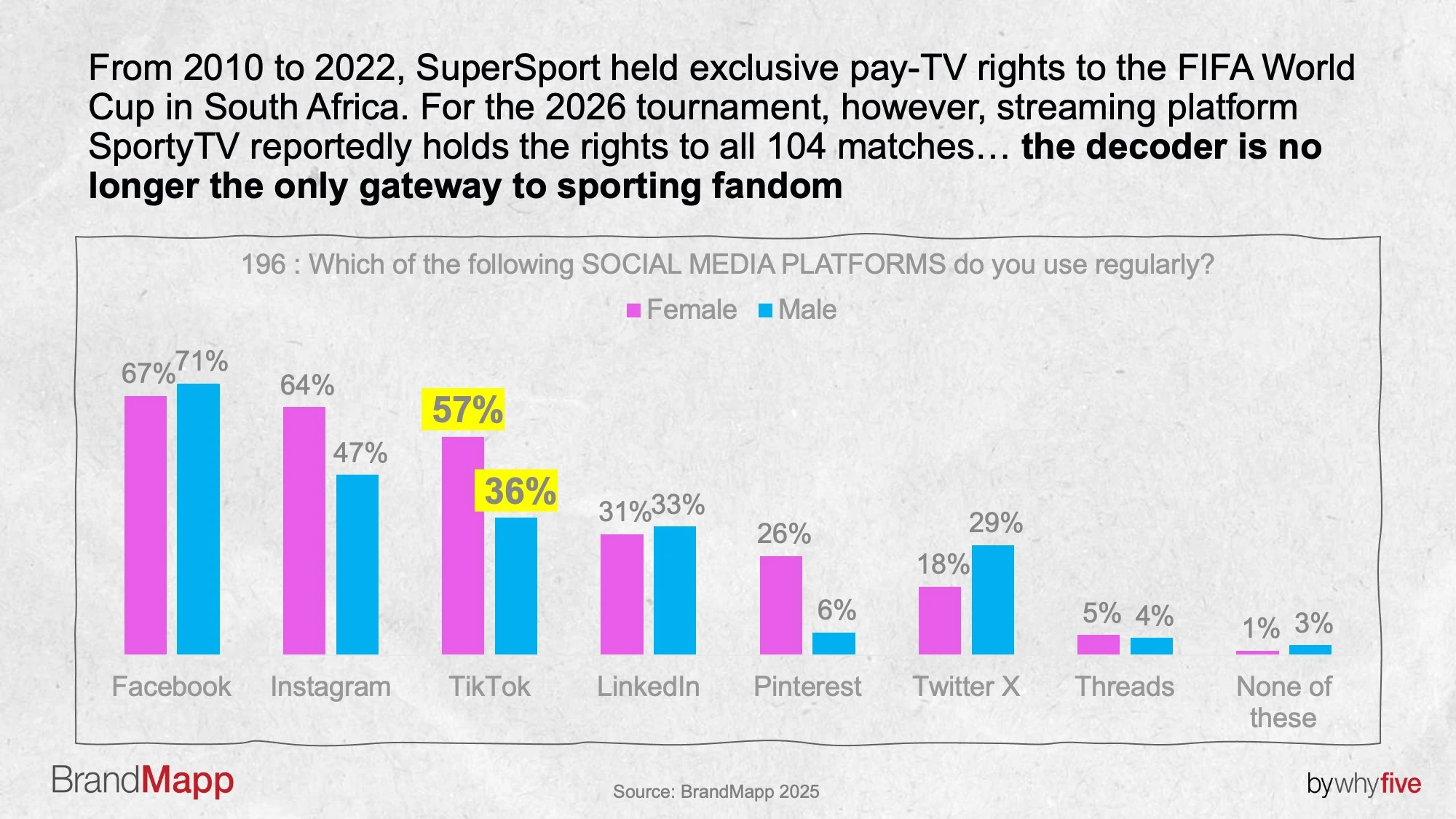
- FIFA has appointed TikTok as a key partner for the upcoming World Cup.
- SportyTV has secured streaming rights for the FIFA World Cup in South Africa, offering access to all 104 matches for a low-cost subscription.
These developments are particularly appealing to younger, mobile-first audiences who expect flexibility and platform choice.
Rather than replacing traditional viewing, streaming is expanding the sports ecosystem. Fans can watch a match in a pub, follow social conversations online, consume highlights on YouTube and engage with digital communities simultaneously.
The Future of Sports Viewing in South Africa
South Africa appears to be entering a new phase of sports consumption.
Major live sporting events remain commercially valuable and largely controlled through traditional broadcasting and subscription models. Yet the broader cultural experience surrounding sport is becoming increasingly digital, social and decentralised.
The evidence suggests that sports viewing is evolving from a scheduled television event into an ongoing, multi-platform experience.
For brands, broadcasters, sporting organisations and marketers, understanding this shift will be essential.
For fans, however, one thing remains unchanged.
Whether gathered around a braai, packed into a stadium, watching from a sports bar or following the action through a smartphone screen, South Africans continue to come together through sport.
And when the All Blacks arrive in 2026, there is little doubt that millions will be watching.