Padel in South Africa: Sport of the Consumer Class or an Exclusive Craze?
If you’ve got 90 minutes, a bit of energy, and R100 to R150 to spare, chances are you’ve considered hitting the padel court. Branded the fastest-growing sport in South Africa, padel is a blend of squash and tennis that’s easy to play, sociable, and a solid workout. But as courts spring up in affluent suburbs and elite clubs, the question arises: is padel just another elite hobby or a growing passion among the South African consumer class?
Padel by the Numbers: Who’s Really Playing?
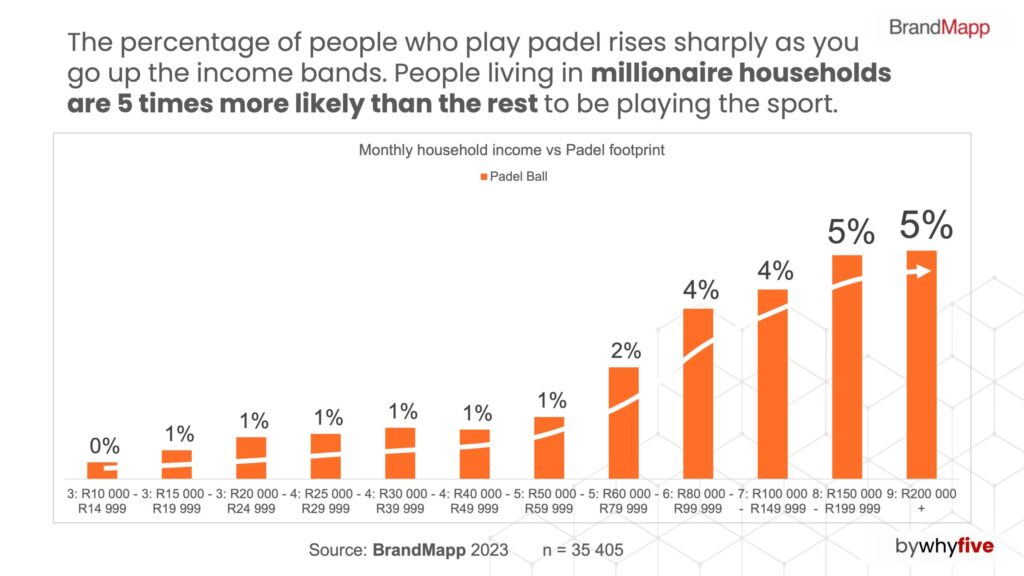
Globally, padel is booming with over 25 million players across 90 countries. In South Africa, it first appeared in 2020 and quickly gained popularity among high-income earners. According to BrandMapp, which surveys over 33,000 middle- and upper-income adults, around 1% of taxpaying South Africans play padel – putting it on par with sports like surfing and horse riding.
“With more courts being developed in upmarket neighbourhoods and malls, padel has become a thing for affluent South Africans,” says Brandon de Kock, Director of Storytelling at BrandMapp.
Booking platforms report over 100,000 active local players, and brands are eagerly jumping on board. The growth of leagues and rising padel celebrities signal that the sport is no longer a passing trend.
Where Padel is Played - and By Whom
From Val de Vie to rooftop malls in Gauteng, padel courts are popping up in elite spaces. BrandMapp data paints a clear picture:
- 50% of players are "TopEnders" (those earning R40K+ per month)
- 60% are aged 35 – 65
- Most players live in Gauteng or the Western Cape
- Gender split is evenly male and female
“It’s no surprise that the sport is popular among higher earners – they have the time, the access, and the courts in their neighbourhoods,” says De Kock.
Is Padel Really That Expensive?
Unlike golf or mountain biking, padel is relatively affordable:
- Hourly game (for 4 people): R400–R600 total (≈ R100–R150 per person)
- Racquet rental: ± R50
- Facility discounts via apps like Playtomic or memberships with Virgin Active and Discovery Vitality
What We Can Learn from Spain
Spain, with over 5 million players and government support for padel infrastructure, shows how the sport can become part of mainstream culture. Community courts and public funding have made padel the country’s second most popular sport after football.
“Spain built the right infrastructure: affordable courts, youth development, and accessible programmes,” says De Kock. “That’s what we’re missing.”
Will South Africa Follow Suit?
If South Africa wants padel to thrive beyond elite spaces, the shift will depend on:
- Entrepreneurs investing in middle- and low-income areas
- Government and corporates supporting public access
- Intentional inclusion to reflect the diverse South African consumer class
- Gender split is evenly male and female
Get the Full Picture
BrandMapp 2023 data provides deep insights into sports trends, income brackets, and consumer behaviours across South Africa.
For access, contact: julie-anne@whyfive.co.za.